Call or Text: (682) 345-7155 Fax: (682) 323-2017
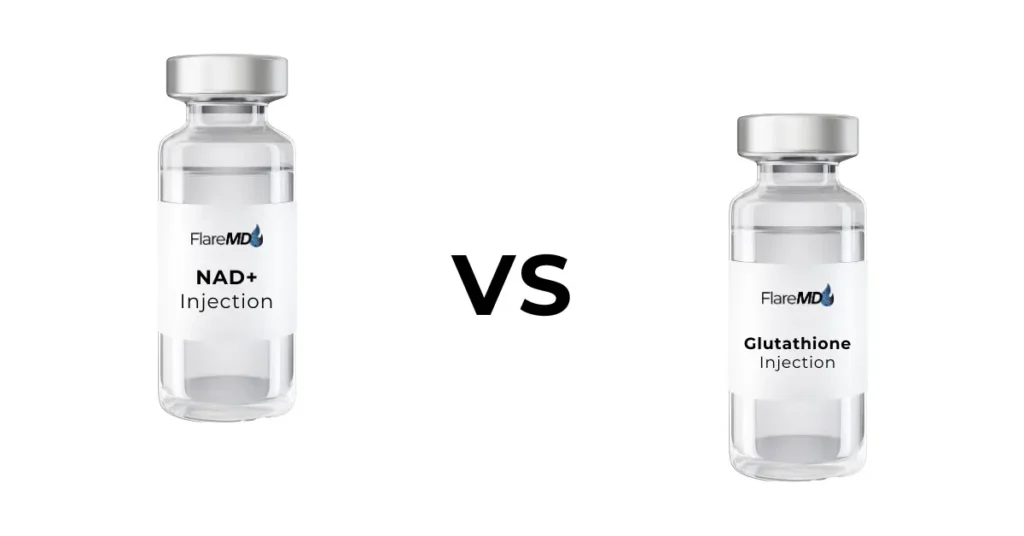
In today’s wellness world, IV therapy has become one of the most effective ways to deliver nutrients directly into the bloodstream for immediate results. Among the many options available, NAD+ and Glutathione stand out for their impressive ability to rejuvenate the body at a cellular level.
Both therapies are popular with high-performing professionals, athletes, and individuals focused on healthy aging—but each works differently. Let’s take a closer look at what they do, how they complement one another, and how to decide which one best fits your goals.
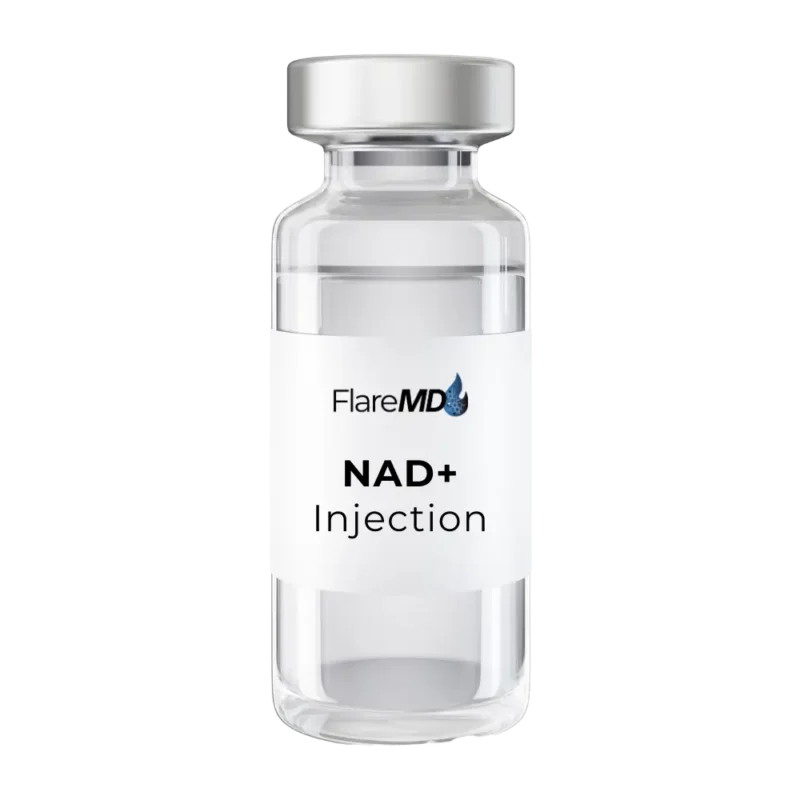
Nicotinamide Adenine Dinucleotide (NAD+) is a coenzyme that fuels energy production in every cell of the body. It’s essential for mitochondrial function, DNA repair, and overall cellular vitality.
Unfortunately, NAD+ levels naturally decline as we age—sometimes dropping by 50% or more by midlife. This reduction contributes to fatigue, sluggish metabolism, and decreased cognitive performance.
Because NAD+ is infused directly into the bloodstream, the body can utilize it immediately—something oral supplements can’t achieve due to poor absorption through the digestive system.
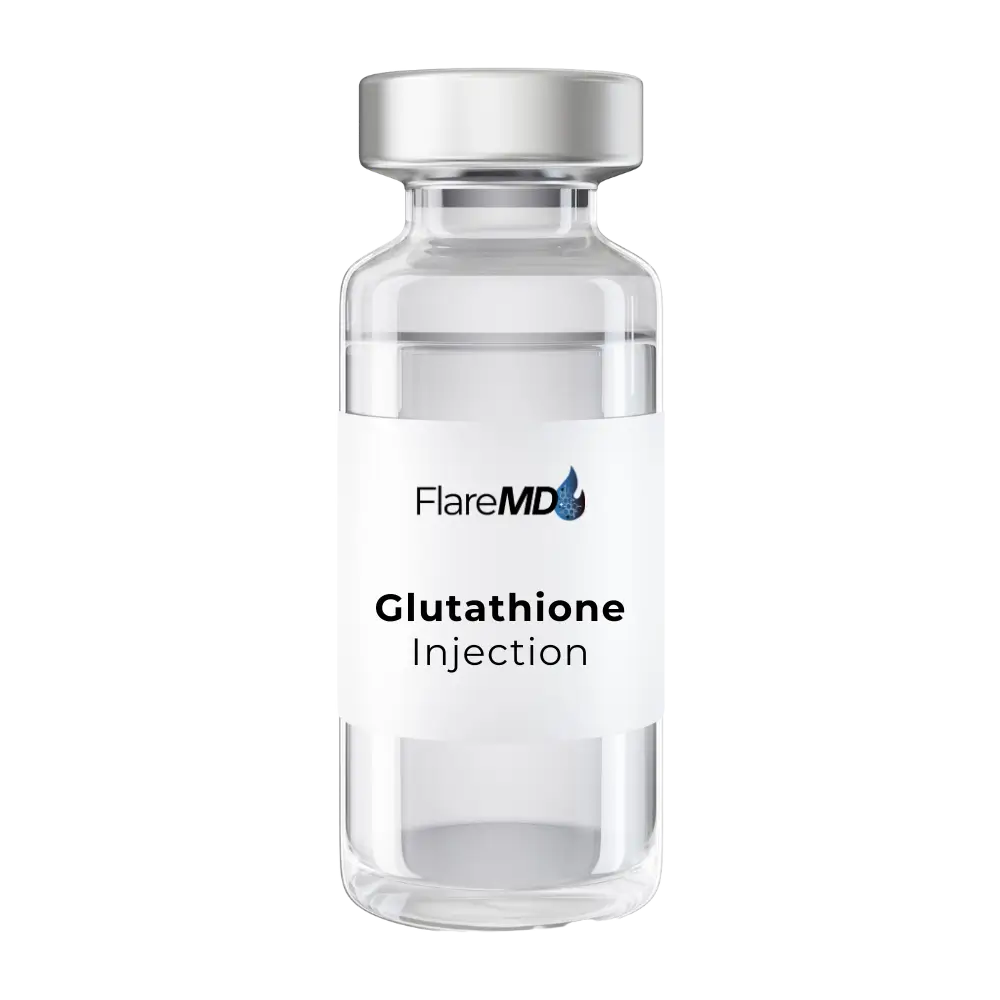
Often referred to as the body’s master antioxidant, glutathione is a remarkably powerful molecule composed of three amino acids—glutamine, glycine, and cysteine. Working together, these components play a vital role in protecting your cells from oxidative damage while also supporting liver detoxification and maintaining a strong immune system.
However, as life becomes increasingly fast-paced, factors such as chronic stress, poor diet, pollution, and illness can gradually deplete your body’s natural glutathione reserves. As a result, cells become more susceptible to inflammation, fatigue, and toxin buildup, making it even more important to restore healthy levels through proper nutrition, supplementation, or IV therapy.
Delivered through IV, glutathione bypasses the digestive system and provides a potent, immediate antioxidant boost.
While powerful on their own, NAD+ vs Glutathione IV Therapy is more effective when combined. These two molecules actually support and regenerate one another at the cellular level:
Together, they promote energy, detoxification, cellular repair, and overall longevity.
Choose NAD+ IV Therapy if you want to:
Choose Glutathione IV Therapy if you want to:
Combine Both for a comprehensive, full-body wellness protocol that enhances energy, recovery, detoxification, and longevity. Many clients at Flare MD choose to pair these infusions for a balanced approach to wellness and anti-aging.
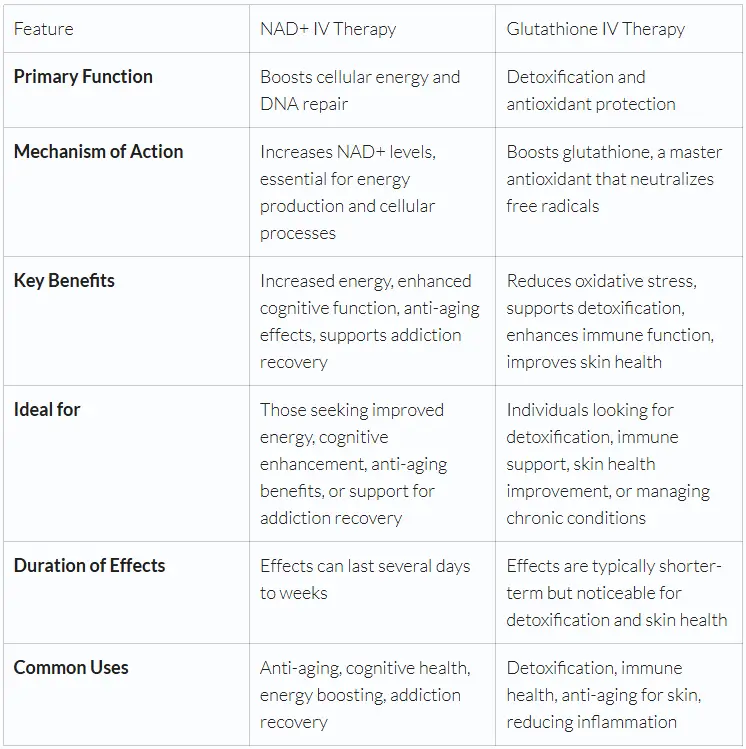
At Flare MD, our IV therapy programs are customized to your unique health goals. Whether you’re looking to boost energy, recover from stress, or enhance your body’s natural detox pathways, our medical team will design a safe and effective treatment tailored to you.
So the final thoughts on NAD+ vs Glutathione IV Therapy, NAD+ fuels your body’s energy and repair systems, while Glutathione protects your cells from stress and toxins. Together, they form a dynamic duo that enhances vitality, sharpens cognition, supports skin health, and promotes longevity.
Whether you’re new to IV therapy or a seasoned wellness enthusiast, Flare MD can help you create a personalized plan to achieve your goals and feel your best from the inside out.
PMC
Cambronne, X. A., & Khusial, D. (2022). “The Role of NAD⁺ in Regenerative Medicine.” PMC – PubMed Central.
https://pmc.ncbi.nlm.nih.gov/articles/PMC9512238/
PMC
Lee, E., Park, H.-Y., Kim, S.-W. et al. (2023). “Vitamin C and glutathione supplementation: a review of their additive effects on exercise performance.” PMC – PubMed Central.
https://pmc.ncbi.nlm.nih.gov/articles/PMC10636510/
PMC
Turro et al. (2018). “NAD⁺ metabolism and oxidative stress: the golden nucleotide on a shaky platform.” PMC – PubMed Central.
NAD+ IV therapy helps restore energy, improve mental clarity, and support healthy aging by replenishing a coenzyme that declines with age.
Glutathione IV therapy aids in detoxification, supports the immune system, reduces oxidative stress, and promotes brighter, clearer skin.