
Call or Text: (682) 345-7155 Fax: (682) 323-2017
A migraine can wipe out your whole day. The pounding pain, nausea, and sensitivity to light and sound make it hard to work, drive, or even keep a pill down. That last part is one of the main reasons people turn to IV therapy for migraines: it delivers fluids, nutrients, and medication directly into your bloodstream, so nothing depends on your stomach.
Below, this guide explains how a migraine IV works, what is in it, how it compares to oral medication, and when it makes sense to book one in Dallas-Fort Worth.

Migraine triggers vary from person to person, but a few are especially common in Dallas-Fort Worth:
For that reason, keeping a simple headache diary can help you spot your own patterns and talk with your doctor about prevention.
A migraine IV goes after several parts of an attack at the same time:
IV fluids and electrolytes correct dehydration quickly, which can help when dehydration is part of what is driving your headache.
Magnesium plays a role in nerve and blood vessel function, and research has linked low magnesium levels to migraines. In addition, B-complex vitamins and vitamin C round out the nutrient support. Learn more on our Magnesium page.
Nausea is one of the hardest parts of a migraine. Zofran is given through the IV to settle your stomach.
Toradol is a non-steroidal anti-inflammatory medication (NSAID) used to relieve moderate to severe pain. However, your health screening confirms it is safe for you before it is given.
Oral migraine medications work well for many people, and you should keep taking anything your doctor has prescribed. The challenge is that migraines often slow down digestion and cause nausea, so pills can take longer to work or come right back up. An IV, on the other hand, avoids that problem.
| Feature | Migraine IV Therapy | Oral Medication |
|---|---|---|
| How it is absorbed | Directly into your bloodstream | Through your stomach and digestive system |
| If you are vomiting | Still works, and anti-nausea medicine is included | Pills may come back up before they work |
| Hydration | Includes IV fluids and electrolytes | None |
| What you get | Fluids, vitamins, magnesium, anti-nausea and anti-inflammatory medicine | A single medication |
| Where | At home, at work, or in a clinic | Wherever you are |
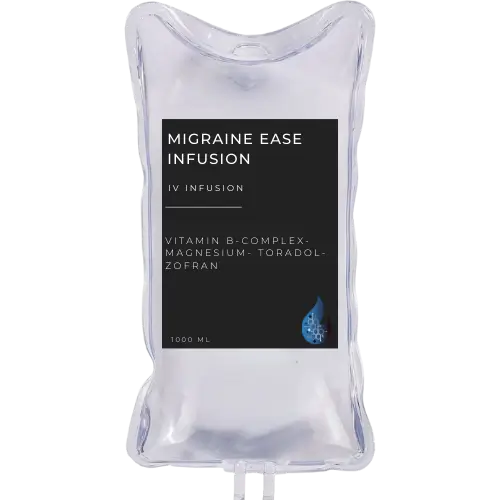
Flare MD offers two migraine drips:
Not sure which one you need? Either way, your nurse will help you choose during your health screening. Current pricing for both is on our IV therapy menu.
A migraine IV can be a good option when:
If you have migraines often, talk with your doctor about a long-term prevention plan. In other words, IV therapy is best used for relief during an attack, not as a replacement for ongoing care.
Call 911 or go to the nearest emergency room for a sudden, severe headache that feels like the worst of your life, a headache after a head injury, or a headache with fever and a stiff neck, weakness or numbness, vision loss, confusion, or trouble speaking. After all, these can be signs of a serious condition.
When you have a migraine, the last thing you want to do is drive. A licensed nurse can come to your home, office, or hotel anywhere in our mobile service area. Call or text (817) 330-9385 to book a mobile visit, or visit one of our clinics. Not sure which is better? See our guide to mobile IV vs in-clinic IV therapy.
IV therapy for migraines combines hydration, magnesium, vitamins, and medications for pain and nausea in a single 30 to 45 minute session, and it works even when you cannot keep anything down. Overall, it is a useful option during an attack, especially alongside a long-term plan from your doctor. When a migraine hits, book a Migraine Relief IV with Flare MD and let a nurse come to you.
Most migraine IVs take 30 to 45 minutes. Since the fluids and medication go straight into your bloodstream, many people start to feel better during the infusion or shortly after it ends.
The Flare MD Migraine Relief IV includes IV fluids, vitamin B complex, vitamin C, magnesium, Zofran for nausea, and Toradol for pain. The Migraine Relief Max adds Reglan, Benadryl, or Phenergan for stronger nausea relief.
Often, yes, but tell us exactly what you took and when. Then your nurse will review your medications during your health screening to make sure the treatment is safe for you.
Some ingredients are not right for everyone, including people who are pregnant, have kidney problems, have a bleeding disorder, or are allergic to NSAIDs. Your health screening covers these questions before any treatment is given.
Yes. In fact, Flare MD's mobile nurses come to homes, offices, and hotels across our service area, so you do not have to drive while you are in pain.
A migraine IV is meant to relieve an attack you are having now. However, if you get migraines often, talk with your doctor about a prevention plan that fits you.

Enter your email and we will send your free add-on code to use when you book your first appointment. Choose B12, glutathione, zinc, and more.
New patients only. One complimentary add-on per patient, applied at your first IV appointment. A $27 value. By submitting your email, you consent to receive email communications from Flare MD and agree to be added to our email list. You can unsubscribe at any time.